College Credits
Dual enrollment through New Hampshire Institute of Technology (up to 12 credits)
OR Rochester Institute of Technology PLTW (9 credits)





Dual enrollment through New Hampshire Institute of Technology (up to 12 credits)
OR Rochester Institute of Technology PLTW (9 credits)
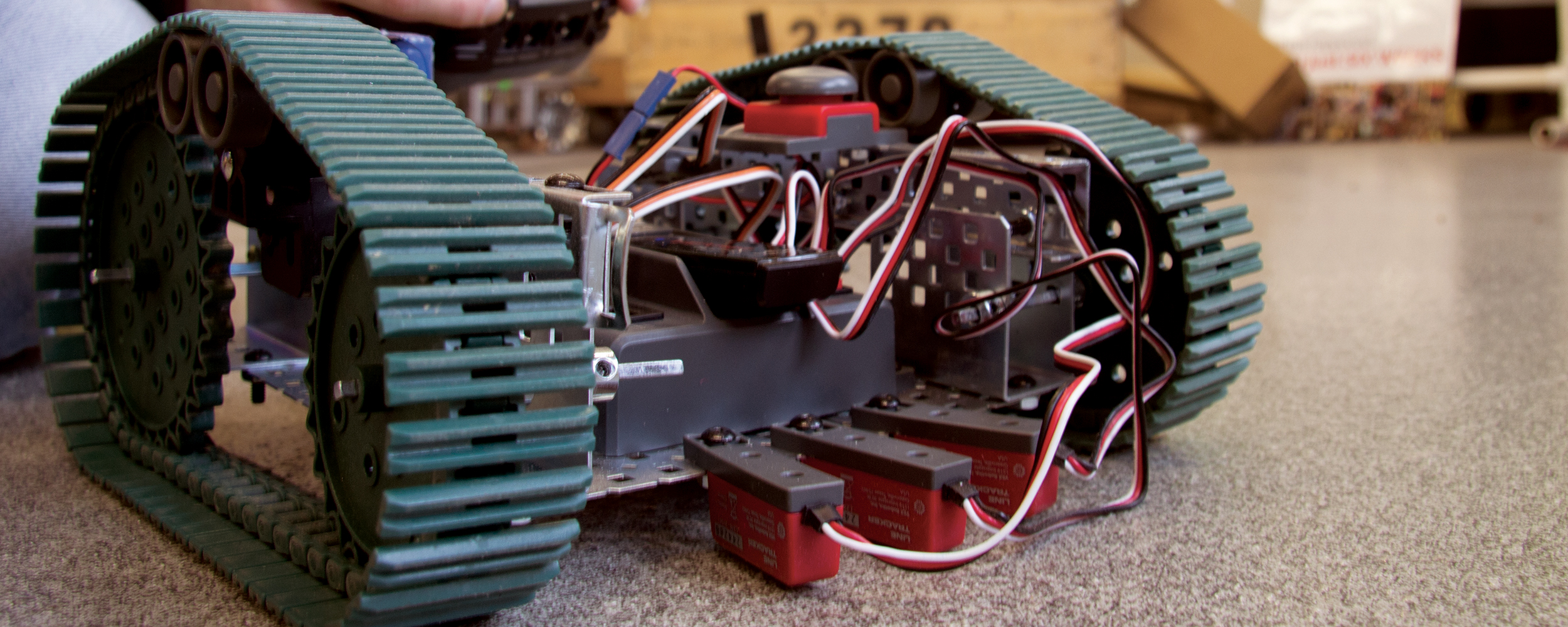
A firm grasp of Science, Technology, Engineering, and Mathematics is essential for success in today’s highly skilled global economy. The Engineering Program incorporates advanced technologies through project-based learning. Through the nationally recognized Project Lead the Way Pathway to Engineering program, students will apply the design process and acquire strong teamwork communication, critical-thinking, and problem-solving skills. Students gain valuable experience working with fundamental engineering principles and applied physics, advanced manufacturing, 3D printing, laser cutting, robotics, and machine tools. The course of studies includes Introduction to Engineering Design, Computer Integrated Manufacturing, and Principles of Engineering.
 The Engineering lab is a dynamic learning environment that replicates the facilities students can expect to experience in post-secondary programs and industry. Students will utilize the most advanced technologies to engage in problem and project-based activities that model engineering principles.
Recommended Prerequisites: College preparatory coursework; ability to manipulate and solve quadratic equations; ability to perform unit conversions for distance, velocity and force; ability to manipulate geometric and trigonometric functions to solve right-angle triangle problems (sine, cosine, tangent, and Pythagorean theorem); ability to manipulate and solve equations involving fractions, exponents, and roots; can work as part of a team; possesses strong interpersonal skills; utilizes effective communication skills; is proficient with technology.
Reading Level of class materials: Grade 12
Embedded Credits: 1 Science OR 1 Math, 0.5 Information Technology OR 0.5 Fine Art
 James Holden joined Stafford in August 2025. Originally from Paradise, California. James has called Vermont home since 2019. After high school, he attended an automotive technical school where he earned an Associate’s Degree in Automotive Technology and began working as a mechanic. While he enjoyed working on cars, he realized he really liked making things, so he began taking night classes to pursue engineering. James earned his Bachelor’s Degree in Mechanical Engineering with a minor in Manufacturing from the California State University, Chico. James and his wife have five children and live on their farm, Valley Acres Farm, in Proctor, Vermont. The farm keeps them busy with various projects throughout the year, including tapping 100 maple trees for syrup in sugaring season, planting a large garden in spring, fixing farm equipment, harvesting apples for cider in the fall, and enjoying the
fruits of their labor during the winter months.
James chose to work at Stafford because of the students’ enthusiasm for learning. As
someone who loves solving problems, he’s excited to help the next generation of
engineers do the same and create jobs here in Vermont. (802) 770-1256

Steve Lohrenz is a software engineer, STEM educator, foster parent, and veteran. He is dedicated to helping people learn technical and problem-solving skills to improve the world. Steve spent 25 years consulting on multi-million-dollar projects. Steve grew up in Montana, has lived in California and Ireland, and has now settled in Vermont. Steve graduated from Montana Tech of the University of Montana with Bachelor of Science degrees in Computer Science and Mathematics. Steve enjoys woodworking, homesteading, writing, and building up his community when he’s not hanging out with his wife, three kids, and various family pets.
(802) 770-1052

Engineering
The left side of the graphic includes the Stafford Technical Center logo and the phrase:
Career Tree – Education with Purpose
This infographic uses the image of a large tree to illustrate career pathways in Engineering.
The tree begins with roots that represent the personal and educational foundation needed for career success. The trunk symbolizes growth, and the tree branches into three progressively higher levels of careers represented by layered platforms surrounding the tree.
The roots of the tree are labeled with four foundational elements:
These elements are presented as the basis for career development.
With Program Completion
Examples include:
Apprenticeship, Associate Degree, Advanced Certification, Experience, etc.
Career options include:
Bachelor’s Degree, Master’s Degree, Ph.D., Specialized Training, Experience, etc.
Career options include:
The tree represents a progression of career development:
The visual emphasizes that career growth is continuous and that each stage builds upon the previous one.